
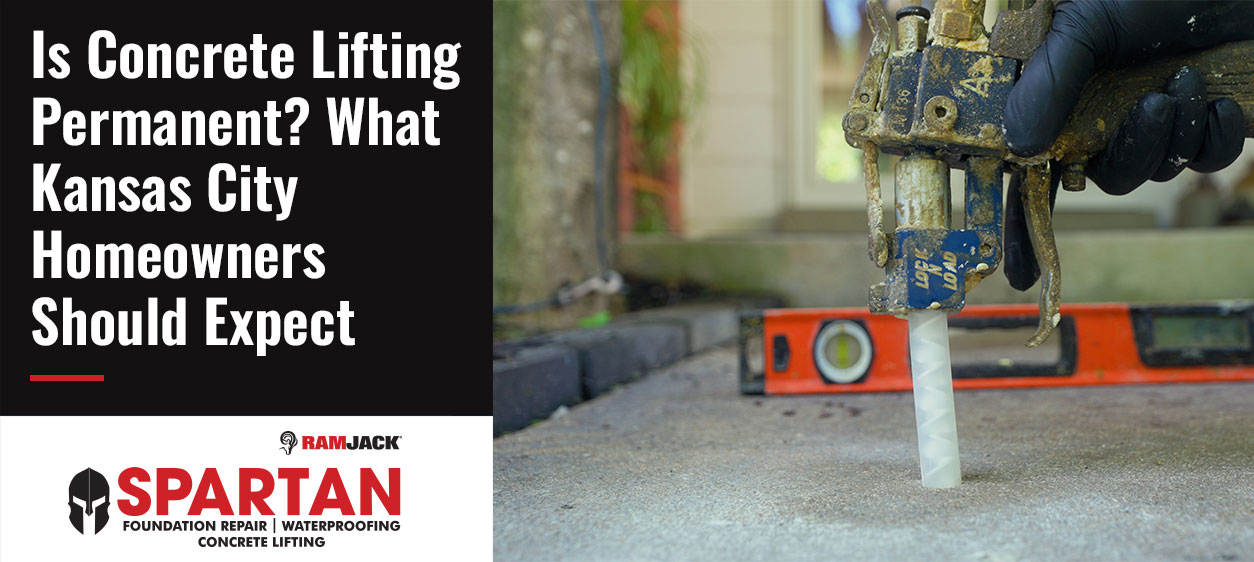
Is concrete lifting permanent, or will your driveway sink again in a few years? Most polyjacking in Kansas City last 20 to 30 plus years and many outlive the slab they support. The polyurethane foam used in polyjacking is designed to last indefinitely and often outlives the concrete slab itself. That longevity matters to Kansas City homeowners who deal with sunken concrete. The real question isn’t whether concrete lifting works but which method lasts longest and what causes slabs to re-settle. This piece covers the concrete lifting process, polyjacking vs mudjacking, how long concrete lifting lasts in Kansas City’s clay soil, and when sunken concrete repair is the right choice. Spartan Ram Jack walks you through what to expect from polyurethane concrete lifting and the factors that affect durability.
Quick Answer: Is Concrete Lifting Permanent?
Polyurethane concrete lifting offers durability that often matches the lifespan of the concrete slab itself. Ask if concrete lifting is permanent and the material answer is yes. Polyurethane foam doesn’t absorb water, decompose, or compress over time. The closed-cell foam used in Kansas City polyjacking can last 10 to 25+ years, and many repairs endure 20 to 50+ years. The foam outlasts most slabs.
Mudjacking presents a different scenario. The slurry mixture lasts 1 to 5 years on account of material breakdown and wash-out. Polyurethane foam remains waterproof and erosion-resistant, which explains why Spartan Ram Jack recommends it for Kansas City homeowners dealing with clay soil movement.
It’s worth mentioning that “permanent” describes the lift material, not your slab’s future. The foam itself won’t fail, but soil conditions can trigger re-settling. Poor drainage that continues washing out soil beneath your driveway can cause problems. Settlement can recur if voids weren’t filled during the original repair. The polyurethane injection remains sound. What matters is whether root causes get addressed with the lift. Your concrete stays level as long as the supporting soil remains stable and drainage directs water away from the foundation.
Why Concrete Sinks or Settles in the First Place
Your concrete slab isn’t the problem. The soil beneath it is. Sinking concrete happens because of what goes on underground, where water, clay movement and temperature changes destabilize the foundation supporting your driveway or patio.
Soil erosion and voids forming beneath the slab
Water movement carries soil particles away from beneath concrete and leaves hollow pockets where support once existed. These voids grow larger with each rain event. The unsupported slab eventually cracks and settles. Gutters that overflow or downspouts that discharge beside your concrete speed up erosion.
Kansas City clay soil’s tendency to shrink and expand
Clay-rich soil absorbs water and swells, then contracts when dry. Kansas City’s expansive clay can expand up to 10% in size when exposed to prolonged moisture. This constant shrink-swell movement puts stress on concrete slabs year after year. Clay soil costs US property owners more than USD 15 billion each year. This is a big deal as it means that damage exceeds that from earthquakes, floods, hurricanes and tornadoes combined.
Poor drainage washing out supporting soil
Poor drainage directs water toward your foundation rather than away from it. Leaking irrigation lines, broken pipes and improper grading saturate soil zones and wash fine particles from beneath slabs.
Freeze-thaw cycles accelerating settlement
Water in soil freezes and expands, then contracts during thawing. This cycle repeats hundreds of times and lifts concrete sections. Voids form when soil settles unevenly. Freeze-thaw damage widens existing cracks and lets more water infiltrate.
How Concrete Lifting Works
Concrete lifting corrects settlement by injecting material beneath the slab through drilled holes. Technicians drill small access points, insert injection ports and pump either polyurethane foam or cement-based slurry into the voids below.
The process fills voids and raises slabs back to level
The injected material flows into hollow spaces under your concrete and fills gaps created by soil erosion. Pressure builds beneath the slab as these voids fill and lifts it back to grade. Technicians monitor elevation throughout using levels or laser sensors to prevent over-lifting. Injection holes get patched with cement once the slab reaches target height.
Polyurethane foam injection vs mudjacking
Polyurethane foam injection uses dime-sized holes and expands upon contact. The foam weighs 2 to 4 pounds per cubic foot and cures in 15 minutes. Mudjacking pumps a cement-sand-water slurry through larger 1- to 2-inch holes. This mixture weighs 100 to 120 pounds per cubic foot and adds considerable load to already-stressed soil.
Why filling the void matters as much as lifting
Lifting without filling voids completely leaves your slab vulnerable to re-settling. Polyurethane foam flows into small gaps and compacts loose soil as it expands. This strengthens the base. The rough texture of mudjacking slurry can’t penetrate tight spaces fully, which increases future settlement risk.
Polyjacking vs Mudjacking: Which Lasts Longer?
Material composition determines longevity differences between polyjacking vs mudjacking for Kansas City homeowners dealing with sunken concrete repair.
Material weight and soil stress differences
Mudjacking slurry weighs 100 to 150 pounds per cubic foot and adds substantial load to soil that already failed to support your slab. Polyurethane foam weighs 2 to 4 pounds per cubic foot and avoids additional stress on weak subgrade. Pumping another 100-plus pounds per cubic foot beneath concrete creates subgrade reloading risk when soil couldn’t hold the original concrete weight.
Lifespan comparison
Mudjacking lasts 3 to 5 years, while polyjacking offers a 10 to 15 year lifespan. High-density polyurethane foam lasts indefinitely in stable soil conditions and often matches the remaining life of your concrete slab.
Cure time and moisture resistance
Polyurethane foam cures within 15 minutes. You can use it right away. Mudjacking requires 24 to 72 hours before you can walk or drive on the surface. Polyurethane is hydrophobic and repels water. It won’t erode or wash out. Mudjacking slurry absorbs moisture and breaks down over winters.
What ‘Permanent’ Really Means for Concrete Lifting
The lift itself is structurally durable
Polyurethane foam provides structural support that lasts 10 to 20 years or more. Many installations last 20 to 50+ years. The material resists moisture and doesn’t break down. It maintains stability through Kansas City’s freeze-thaw cycles. The foam itself delivers on that promise when you ask if concrete lifting is permanent. It won’t compress, erode, or wash out like cement-based alternatives.
What can cause a slab to sink again
Concrete can settle again if soil beneath continues to move or erode. Poor drainage allows water to wash away supporting soil and recreate voids beneath your slab. Expansive clay soils that expand and contract with moisture changes stress the lifted concrete. Unresolved drainage problems or incomplete void filling during the original repair shortens lifespan. The polyurethane injection remains structurally sound then, while soil conditions determine whether your slab stays level.
Why addressing root causes matters more than method
Addressing soil instability and drainage matters more than which lifting method you choose. Concrete replacement doesn’t fix weak soil conditions. New slabs sink under the same circumstances. Stabilizing the ground beneath your slab prevents future sinking. Spartan Ram Jack assesses drainage patterns and soil stability before lifting. This ensures Kansas City homeowners get results that last.
How Long Does Concrete Lifting Last in Kansas City?
Location-specific conditions shape repair longevity. Kansas City homeowners face unique factors that influence how long concrete lifting lasts.
Typical lifespan by method
Mudjacking lasts 1 to 10 years. Most repairs hold 1 to 5 years. Polyurethane foam lifting in Kansas City delivers 10 to 15 years minimum. High-quality installations last 20 to 50+ years. The material makes the difference.
Kansas City clay soil and freeze-thaw effects
Clay soils expand when wet and shrink when dry. This stresses lifted slabs. Freeze-thaw cycles worsen the problem. Water in soil freezes and expands by about 9%. This creates pressure that lifts concrete. Soil contracts when thawing and can compact further. New voids form as a result. Repeated cycles loosen soil particles and reduce support capacity.
Role of drainage and grading
Water erosion under slabs causes most settlement issues. Controlling where water goes keeps concrete stable. Proper grading slopes soil away from slabs. Redirect downspouts away from concrete. Ensure ground slopes away to prevent water from washing out the stabilized base. Poor drainage undermines even the best lifting jobs.
Industry warranty standards
Warranty coverage varies. Some contractors offer 1 to 2 years. Others provide three-year limited transferrable warranties. Spartan Ram Jack stands behind Kansas City polyjacking work with complete coverage that reflects confidence in polyurethane foam injection durability.
Signs Concrete Lifting Was Done Correctly
Quality workmanship shows in observable results. Spartan Ram Jack identifies four indicators that confirm your Kansas City concrete lifting was executed right.
Even, level surface with no lingering slope
The slab rests stable with voids filled underneath. Injected polyurethane foam creates a level surface without dips or high spots. Water drains away from your foundation rather than pooling on the concrete.
No new cracking at injection points
Injection holes get sealed without stress cracks radiating outward. The foam maintains its shape in moist conditions and resists water penetration. Sealed and filled cracks keep water out, which protects against freeze-thaw damage.
Slab holds level through freeze-thaw season
Polyurethane foam resists moisture and temperature changes and holds steady through Kansas City winters. The material won’t wash away or deteriorate over time. Concrete lifting lasts decades when done right because the highly durable foam withstands the elements.
No re-settling at edges or corners
Exposed slab sides stay backfilled with soil or landscaping materials to prevent water infiltration beneath. Downspouts redirect away from the concrete and grading slopes as needed. Your concrete remains stable with minimal maintenance after the foam cures.
When Concrete Lifting Isn’t the Right Fix
Lifting repairs damaged concrete, not failing concrete. Certain conditions make replacement the better choice to Kansas City homeowners.
Severely cracked or structurally failing slabs
Deep, wide cracks running through the whole slab indicate structural failure rather than simple settlement. The slab itself has failed when concrete shatters into multiple pieces, crumbles at edges, or shows spalling where the surface breaks down. Lifting won’t repair deteriorated concrete. Replacement becomes the work to be done if the slab is soft, flaking, or breaking apart.
Deep voids beyond injection capacity
Voids several feet below grade cannot be reached by drilling through the slab. Standard concrete lifting addresses voids beneath slabs, whereas deep soil instability requires injection lances driven below grade. Surface injection can’t deliver material to that depth at the time weak soil sits multiple feet down.
Replacement as an economical solution
Settlement of 6 to 8 inches or more points to severe soil problems. Replacement with proper base preparation makes sense in such cases. Replacement addresses mechanisms properly if multiple sections are failing or the slab has been lifted before and failed again.
How contractors determine lifting vs replacement
Spartan Ram Jack inspects crack severity, slab integrity, and void depth during assessment. A solid slab that dropped presents a different problem from concrete breaking into pieces. The slab reached the end of its useful life when deterioration becomes widespread.
The Concrete Lifting Process Step by Step
Spartan Ram Jack follows a systematic approach when performing polyurethane concrete lifting in Kansas City.
Inspection and assessment
Technicians inspect the concrete surface to determine settlement extent, identify problem areas, and map injection points. The assessment establishes the lift plan guiding the entire job. They review slab thickness, settlement degree, and surrounding soil condition. Certain applications may include ground-penetrating radar to map void locations.
Drilling access holes
Small holes are drilled into the concrete slab at predetermined strategic locations. These holes are 5/8 inch in diameter and roughly the size of a dime. Injection ports install into these holes. Mudjacking requires holes 2 inches in diameter, roughly the size of a soda can. Smaller holes mean less surface disruption and cleaner finished appearance.
Injecting foam or slurry beneath the slab
Dual-component polyurethane foam injects through ports using specialized high-pressure equipment. The foam enters voids in liquid form and flows into small gaps. As the chemical reaction proceeds, foam expands faster to fill space. The expanding foam compacts loose soils beneath the slab and gets upward hydraulic pressure that raises concrete.
Monitoring the lift live
Technicians monitor the rise using levels or laser sensors to ensure accurate positioning. Precision within 1/8 inch of target elevation is often achieved. Injection stops once the slab reaches desired height.
Sealing holes and final walkthrough
Small injection holes are patched with concrete grout or matching sealant. The foam cures to 95% of its final strength within 15 to 20 minutes. The surface can support foot and vehicle traffic almost immediately.
Cost Factors for Kansas City Homeowners
Multiple variables determine your concrete lifting investment. Spartan Ram Jack assesses several factors when looking at Kansas City concrete slab lifting projects.
Square footage of affected slab
The total area that needs repair affects your project scope. Larger surfaces like driveways or patios need more material and labor compared to smaller sections such as single sidewalk slabs. Fixed costs exist for every job and include equipment deployment and travel. Smaller repairs carry higher per-unit rates because of this.
Method used: polyjacking vs mudjacking
Material choice drives project investment differences. Polyurethane foam costs more than cement-based slurry due to manufacturing and performance characteristics. The foam’s precision application and superior durability justify the material premium.
Severity of voids
Void depth beneath your slab is the most important cost driver. Deeper voids need more material to fill. Settlement degree also matters. Raising a slab several inches demands more foam volume than correcting minor drops. Then two similar-sized slabs can have different project costs based on subsurface conditions.
Drainage correction needs
Water management may add to your concrete lifting project. If water erodes soil beneath your concrete, drainage corrections must happen first. This protects your investment and prevents re-settling.
Conclusion
Polyurethane concrete lifting offers Kansas City homeowners a solution that often outlasts the concrete slab itself. The foam remains structurally sound indefinitely if you address why settlement happens. Your lifted concrete stays level when proper drainage directs water away from the foundation and soil conditions remain stable. Spartan Ram Jack of Kansas City assesses both the lift and soil conditions to deliver results that last decades, not just years. Contact us today to receive a free polyjacking estimate.