
Mold in crawl space areas threatens Columbia homeowners, especially when high humidity levels above 60% create perfect conditions for growth. Columbia’s subtropical climate combined with heavy rainfall and clay soil turns crawl spaces into moisture traps. Then this excess moisture becomes the root cause of most crawl space problems, from musty odors and health symptoms to sagging floors and compromised structural integrity. We’ve seen how these issues worsen over time, with mold re-growing within 24-48 hours if conditions remain unchanged. At Spartan Ram Jack Columbia, we specialize in complete solutions that address moisture control and structural repairs for long-term protection to keep your home safe and healthy.
Why Columbia Crawl Spaces Develop Moisture Problems
Standing Water from Heavy Rainfall
Water enters crawl spaces through multiple pathways at once. Columbia receives 45 to 55 inches of rain annually. Frequent storm events saturate soil repeatedly without adequate drying intervals between them. Groundwater rises after prolonged rainfall, especially when you have soil that reaches saturation and water tables climb toward the crawl space floor level. Flat terrain throughout much of Columbia limits natural drainage away from foundations. Surface water concentrates near structures after rain. Visible water that remains more than 24 to 48 hours after rain stops signals a problem.
High Humidity in South Carolina’s Climate
The moisture problem extends beyond rainfall. Outdoor dew points exceed 70 degrees Fahrenheit from May through September. The air itself carries enormous moisture loads. Warm, saturated air enters a cooler crawl space through foundation vents and hits surfaces that may be 10 to 20 degrees cooler. The result is condensation on framing lumber, HVAC ductwork, plumbing and insulation. The deposited moisture doesn’t evaporate and escape because ventilation is limited. It stays.
Poor Drainage and Clay Soil Issues
The Midlands region sits on clay-heavy soils that create unique challenges. Clay has low permeability. Water drains slowly and accumulates around foundations. Clay swells when wet and shrinks when dry. This expansion-contraction cycle can crack foundation walls, open gaps between the foundation and framing, and create pathways for water and humid air to enter. Moisture distribution in clay soil can be uneven and causes foundations to settle at various rates.
Inadequate Vapor Barriers in Older Homes
Builders constructed older homes without vapor barriers or moisture prevention systems. The crawl space remains exposed to humidity, soil gasses and ground moisture without this protection. Bare soil releases moisture into the crawl space air continuously. That evaporation accelerates after rain. Brief episodes of standing water can deposit organic sediment, saturate the soil and create conditions for mold and wood decay that persist long after the water recedes.
How Mold Takes Over Your Crawl Space
Dark, humid environments provide everything mold needs to thrive. Fungal colonies begin forming within 24 to 48 hours once moisture establishes itself in your crawl space.
Types of Mold Found in Columbia Crawl Spaces
Cladosporium appears most often in local crawl spaces. This mold shows up brown, green, or black on wood surfaces, carpets, and HVAC ducts. Penicillium grows as fuzzy blue, green, or yellow colonies, especially in areas with prior water damage. Aspergillus presents as green, white, or gray with dark spots and a powdery appearance. You might also encounter Alternaria (white with black spots), Aureobasidium (pink with black spots), or Stachybotrys (black mold), which grows on high-cellulose materials.
Visible Signs of Mold Growth
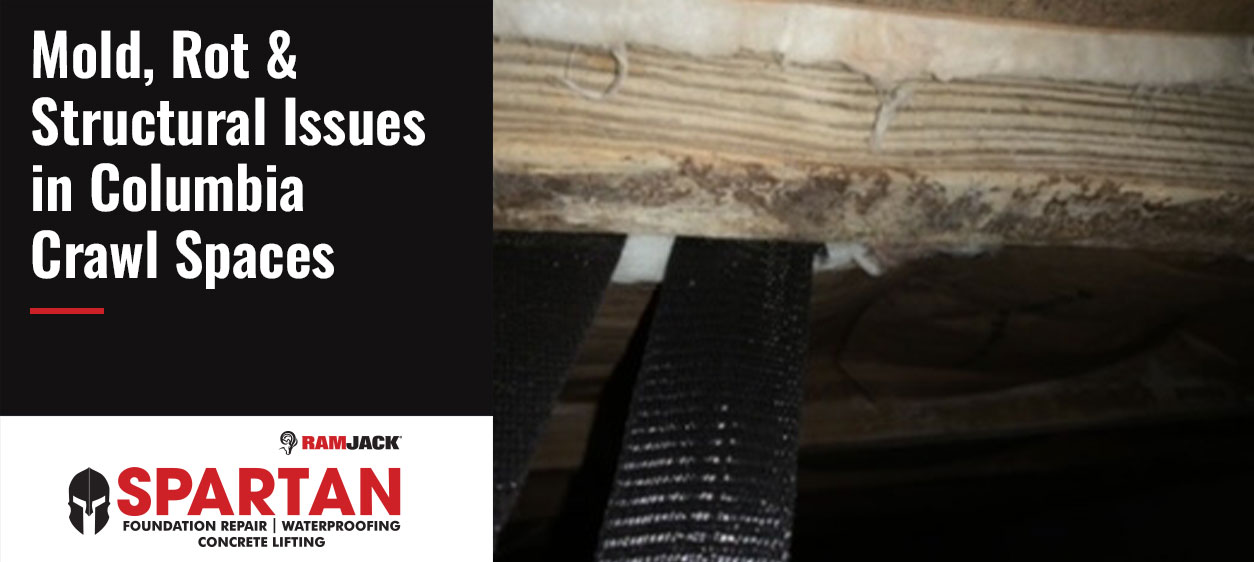
Mold appears in round, speckled growth patterns rather than uniform coverage. Gray, black, or white fuzzy growth on floor joists, subfloor sheathing, or sill plates confirms active colonies. Dark staining without obvious fuzz can indicate dormant mold or early-stage growth. The texture changes as colonies expand in three-dimensional patterns.
Musty Odors Spreading Into Your Home
That damp, earthy smell signals mold releasing microbial volatile organic compounds (mVOCs). The odor intensifies after rain or on humid days. Stack effect pulls crawl space air upward into living areas. Warm air rising inside your home creates negative pressure that draws replacement air from below. Much of first-floor air comes from your crawl space and carries humidity and allergens with it.
Health Symptoms Linked to Crawl Space Mold
Mold spores trigger allergic and respiratory symptoms when you breathe them. Common reactions include runny nose, congestion, eye irritation, sneezing, coughing, sore throat, skin rash, headache, and wheezing. People with existing respiratory conditions, asthma, allergies, or compromised immune systems face vulnerability.
Structural Damage from Wood Rot and Decay
Moisture doesn’t just create unpleasant odors—it destroys the wood holding your home upright. Floor joists that absorb water lead to structural failures that follow quickly.
Sagging and Bouncy Floors
Floors that feel springy underfoot signal weakened joists beneath. You might notice visible sagging, sloping, or dips across the floor surface. Gaps form between floors and interior walls as the structure pulls downward. Furniture leans at odd angles, and doors stick in frames or refuse to close. 83% of crawl spaces show signs of existing or developing structural problems, according to industry data.
Weakened Floor Joists and Support Beams
Wood rot falls into three categories, and each attacks structural lumber in different ways. White rot breaks down cellulose and lignin. This creates lighter-colored spots on wood that becomes springy and bends before snapping under load. Brown rot spreads faster and causes wood to flake, crack, and appear burnt in spots. A 1% decrease in wood weight results in a 75% loss in toughness. Soft rot progresses slower but appears discolored and spongy in wood exposed to prolonged moisture. Termite damage hollows out wood along the grain, with infestations continuing for 8 years or more in homes without annual pest inspections.
Wall Cracks and Foundation Settlement
Foundation cracks wider than 1/10 inch require attention. Horizontal cracks indicate inward pressure from soil or water against foundation walls. Stair-step cracks in brick or masonry result from foundation settlement or shifting. Crawl space supports sink into weak soil and pull floors down. This drags the entire framing structure downward and causes cracks in drywall around door and window frames.
Damaged Insulation and Energy Loss
Unsealed crawl spaces allow cold air in winter and humid air in summer to penetrate floors. Gaps develop around windows, doors, and walls when structural supports shift. These gaps create pathways for air escape and energy waste.
Professional Crawl Space Repair in Columbia
Crawl Space Encapsulation in Columbia
Sealing your crawl space creates a controlled environment that blocks ground moisture for good. Crawl space encapsulation in Columbia involves installing a durable polyethylene barrier across floors and walls. The process seals out moisture and prevents pest entry. It can last up to 25 years when installed correctly. A sealed crawl space helps maintain safe wood moisture content and stops the cycle of dampness that encourages mold growth.
Moisture Control Systems and Dehumidifiers
Vapor barriers alone don’t remove moisture in the air. Dehumidifiers extract humidity whatever the outdoor conditions and maintain levels below 60% where mold cannot grow. Commercial-grade units feature built-in condensate pumps that push water uphill or across distances. Drainage runs to exterior areas or sump pumps. These systems prevent the 10 to 15 gallons of daily ground evaporation from causing damage.
Structural Repairs by Spartan Ram Jack Columbia
We install heavy-duty crawl space jacks that stabilize sagging floors and prevent further settlement. Damaged insulation gets replaced with moisture-resistant materials. This improves comfort and reduces energy costs.
Long-Term Protection and Warranties
Our work comes backed by long-term, transferable warranties that protect your investment. These warranties stay with your home even after you sell and extend coverage to new owners.
Free Crawl Space Evaluation
Nobody wants to crawl through a damp, cramped space underneath their home. We handle that unpleasant task for you. Our certified field inspectors conduct full evaluations of your crawl space at no cost and with zero obligation.
We get into structural elements like floor joists, support jacks, and foundation walls when we inspect. We check for moisture intrusion from groundwater, condensation, or plumbing leaks. Pest infestations get identified before they cause extensive damage. We look at everything that could compromise your home’s structural integrity or create health hazards.
You receive a detailed report outlining any problems we found once the assessment is complete. The report has our professional recommendations for addressing issues like mold in crawl space areas, wood rot, standing water, or inadequate vapor barriers. We provide a free written estimate tailored to your home’s needs.
Our approach prioritizes honest evaluation over sales pressure. Customer satisfaction drives every decision, and we back that commitment with a 100% satisfaction guarantee. The inspection gives you information about your crawl space condition without any pressure to proceed with repairs right away.
Schedule your free crawl space evaluation with Spartan Ram Jack Columbia to understand what’s happening beneath your floors and what solutions will protect your home over time.