
Most Kansas City homeowners think about sump pump installation Kansas City only after their basement floods, but that reactive approach can cost hundreds of dollars in repairs and create stress. May is the rainiest month in the Kansas City area, and every rainfall puts considerable pressure on your basement walls. Damp conditions trigger mold growth within one or two days. Fall sump pump installation Kansas City offers the best time to install sump pump systems because the ground is dry and contractors are available. Your basement flood prevention system has months to prove itself before Kansas City spring flooding begins. Spartan Ram Jack walks you through why timing matters, seasonal water patterns, installation costs, and how to protect your Kansas City home before winter arrives.
Quick Answer: Why Fall Is the Best Time for Sump Pump Installation
Fall delivers three distinct advantages Kansas City homeowners need to understand when installing a sump pump. The ground stays dry and workable before winter freezes arrive. This makes excavation faster and less complicated. Dry conditions let contractors dig the sump basin, place the pump and route discharge lines without battling saturated soil or standing water.
Contractor availability moves between seasons. Spring and early summer represent the busiest period for sump pump work. When you schedule during these peak months, you face longer wait times and higher emergency service costs. Fall installation secures your spot before demand spikes.
The Midwest rainy season begins in April and can last through mid-summer. A fall installation gives your system months to run through test cycles before Kansas City spring flooding begins. You avoid the worst-case scenario: a system installed during or right before heavy rain that remains untested at the time you just need it most.
Battery backup sump pump systems require proper setup and verification. A fall installation window allows time to confirm the backup activates correctly during simulated power outages. Storm-related outages coincide with flooding conditions, and this testing period becomes critical for basement flood prevention.
Kansas City’s Seasonal Water Patterns — Why Timing Matters
Kansas City spring rainfall averages and flood-prone months
Kansas City’s wettest months create predictable basement pressure patterns. April averages 3.70 inches of precipitation, while May reaches 5.23 inches. These two months deliver the heaviest concentrated rainfall of the year, when groundwater tables rise and soil remains saturated from winter moisture.
Winter freeze-thaw cycles and their effect on soil and groundwater movement
Freeze-thaw cycles alter how water moves through Kansas City soil. Soil freezing reduces infiltration capacity and gets cryosuction. Water migrates toward the freezing front rather than draining downward. Partially frozen ground reduces the soil’s capacity to absorb water. Snowmelt travels sideways through soil toward foundation walls rather than draining properly.
The frozen layer acts like a barrier. Water has nowhere to go except along your foundation when the top soil layer thaws before the frozen layer below.
Why basements are most vulnerable in late winter/early spring, not summer
Groundwater levels peak during late winter and early spring according to USGS monitoring. Spring rainfall hits ground already saturated from melting snow. This combination creates maximum hydrostatic pressure against basement walls. Summer storms fall on dry soil that can still absorb moisture.
What Happens If You Wait Until Spring to Install
Delaying sump pump installation Kansas City until spring creates four distinct problems that put your basement at risk.
Installing during or right before heavy rain means the system is untested
A sump pump installed during active rainfall has no chance for testing before it faces real flood conditions. The system requires verification under actual load to confirm the pump activates correctly and discharge lines flow freely. Battery backup must engage during power loss. Installing when you already need the protection leaves zero margin for equipment adjustments or troubleshooting.
Ground saturation and flooding can complicate excavation and installation
Kansas City clay soil holds moisture longer than sandy soil. Saturated ground during spring makes basin excavation difficult and messy. Then standing water in the work area delays installation and can compromise pump placement. Wet conditions extend labor time and increase project costs.
Spring is peak season for contractors — longer wait times
May through July represents peak season for contractors. Schedules fill months in advance, and delays cascade into longer wait times. Securing a sump pump contractor Kansas City during this period requires booking three to six months ahead.
Risk of basement flooding before the system is even in place
A basement that floods once will flood again without protection. Standing water creates mold conditions within 24 to 48 hours and causes thousands in structural damage before your new system even begins operation.
Why Fall Is the Optimal Installation Window
Ground is dry and workable, making excavation easier and faster
Fall soil conditions in Kansas City are cool and dry. The ground becomes easier to excavate. Contractors can dig the sump basin and complete installation work without battling saturated Kansas City clay soil. Dry ground reduces excavation time and labor costs compared to spring conditions.
Contractor availability is higher before winter demand spikes
Fall represents off-peak season for sump pump contractor Kansas City schedules. Contractors have more availability and allow faster project start dates with tailored attention. You avoid competing with spring’s backlog of emergency calls. More, fewer projects mean your installation becomes a higher priority.
System has months to be tested before spring flood risk begins
Your battery backup sump pump gets months of operational testing when you install before winter. You can run test cycles and verify the discharge line functions. The system proves itself under controlled conditions before Kansas City spring flooding begins in April. Backup activation gets confirmed.
Avoids emergency installation during an active flooding event
Fall sump pump installation Kansas City eliminates the panic of emergency service calls. Emergency installations cost more and provide no testing window. The best time to install sump pump systems is when your basement stays dry, not when water already threatens your foundation. Scheduling ahead means you get this advantage.
Seasonal Installation Comparison
Timing affects every aspect of sump pump installation Kansas City projects. Here’s a direct comparison showing how seasonal conditions affect the process:
| Season | Ground Condition | Contractor Availability | Testing Window | Main Risk |
| Fall (Sept-Nov) | Dry and workable | High availability | 4-6 months before spring flooding | Minimal risk |
| Winter (Dec-Feb) | Frozen or freezing | Moderate availability | 2-4 months testing time | Frozen ground complications |
| Spring (Mar-May) | Saturated from rainfall and snowmelt | Low (peak season) | No testing before flood risk | Active flooding during installation |
| Summer (Jun-Aug) | Variable, storm-dependent | Moderate to low | Limited window before fall | Thunderstorm disruptions |
Fall is the best time for sump pump system installation in northern states. Spring maintenance becomes the highest-risk period for basement flooding, which makes fall sump pump installation Kansas City the smart choice. Winter installations are still possible if your pump exceeds 7 to 10 years old, but frozen ground increases labor complexity. Spartan Ram Jack recommends fall scheduling so you can secure contractor availability and complete testing before Kansas City spring flooding begins.
Signs Your Kansas City Home Needs a Sump Pump
Warning signs help you schedule fall sump pump installation Kansas City before basement damage occurs.
Basement or crawl space has flooded before
Past flooding represents a clear indicator your home needs protection. A basement that has flooded once will flood again under similar conditions. Standing water causes foundation deterioration and mold growth.
Home sits on a low point or near a slope
Homes built in low-lying areas or near slopes face higher flood risk. Water collects at the lowest point. Your foundation becomes the natural collection zone during rainfall.
Existing sump pump is more than 7-10 years old
Sump pumps last 7 to 10 years. Pumps approaching this age require replacement before failure occurs during Kansas City spring flooding basement conditions.
Visible water stains or musty odors in the basement
Musty odors confirm excess moisture above 60% humidity. Water stains and white chalky residue (efflorescence) show water seeping through your foundation. Mold begins growing within 24 to 48 hours under these conditions.
No current sump pump despite wet basement history in the neighborhood
Groundwater ignores property boundaries. Your home faces similar vulnerability if neighboring properties experience basement flooding.
How Sump Pump Installation Works
Professional sump pump installation Kansas City follows a structured five-step process that will give you basement flood prevention.
Site inspection and basement assessment
Contractors identify the lowest point in your basement where water naturally collects. The inspection confirms electrical outlet placement within reach of the pump cord and verifies foundation drainage Kansas City conditions.
Sump basin excavation and placement
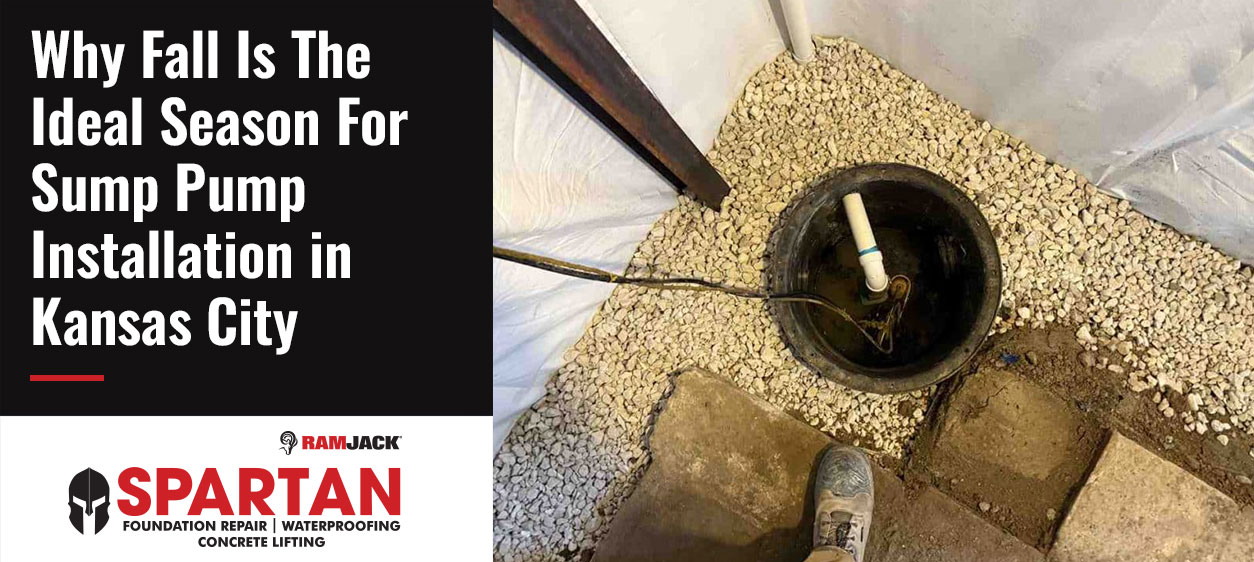
Excavation creates a pit at least 22 inches deep and 18 inches in diameter. A layer of gravel at the bottom provides drainage. The basin must have a hard, level bottom to prevent impeller wear. The pit rim sits flush with your basement floor.
Primary pump installation and discharge line routing
Contractors attach a check valve to prevent water backflow into the pit. A weep hole drilled at 45 degrees, two fingers above the discharge adapter, prevents air lock. The discharge pipe routes outside through your foundation wall with adequate slope to drain.
Battery backup system installation
Battery backup sump pump units mount on a stable base 2 to 4 inches higher than the primary pump. This setup activates the backup only at the time water rises beyond primary pump capacity. The battery box sits on an elevated shelf away from potential water exposure.
System testing and homeowner walkthrough
Contractors fill the pit with water to trigger both pumps. Testing confirms activation, drainage flow, and battery backup engagement during simulated power outages.
Battery Backup: Why It Matters for Kansas City Winters
Winter storms that knock out power often coincide with flooding conditions
Severe storms create a dangerous combination for Kansas City basements. Lightning strikes transformers and power lines and cuts electricity to entire neighborhoods. High winds down trees onto power lines during the same weather events that bring heavy rainfall. Flooding conditions and power outages occur at the same time then. Weather-related power outages doubled from 2000-2009 compared to 2014-2023.
How battery backup systems keep the pump running during outages
Battery backup sump pump systems activate within seconds when power fails. The controller detects electrical interruption and switches to battery power right away. A quality system provides 5 to 7 hours of continuous runtime. During moderate conditions when the pump cycles every 10 to 15 minutes, your system could last two or maybe even three days before depleting the battery.
Maintenance and testing schedule for backup batteries
Test your battery backup sump pump at the start of winter and after heavy storms. Unplug the primary pump and fill the pit to verify backup activation. Replace batteries every 3 to 5 years whatever the use. A dead backup battery provides no protection during power outages when you need it most.
Maintenance to Keep Your System Ready
Annual pump testing
Pour water into the sump pit until the pump activates. The system should turn on smoothly and clear the pit without hesitation. Test quarterly to verify the float switch and motor respond correctly. Monthly checks take only a few minutes by confirming the pump is plugged in and listening for unusual sounds.
Battery backup replacement schedule
Replace backup batteries every 3 to 5 years whatever the use. Sealed lead-acid batteries degrade with age whether cycled or not. Test monthly by unplugging AC power and confirming the pump switches to battery. Replace batteries before they fail when the low-charge alarm triggers shortly after testing, the battery won’t hold a full charge overnight, or visible corrosion appears.
Keeping the discharge line clear of debris and freezing
Winter freezing creates solid ice barriers in discharge pipes. Check for snow or ice accumulation around the discharge pipe and remove it right away. Insulate exposed sections with heat tape or foam pipe insulation. Direct the line away from your foundation with a downward slope to prevent standing water that could freeze.
Scheduling a fall check-up for existing systems
Spartan Ram Jack recommends professional inspections before Kansas City spring flooding begins. Annual service identifies wear and early failure signs not visible during routine checks.
How Spartan Ram Jack Helps Kansas City Homeowners Prepare
Spartan Ram Jack brings over 10 years of Kansas City-specific experience to sump pump installation Kansas City projects. We’re a locally owned company that understands Kansas City’s clay soil behavior and seasonal groundwater patterns affecting your basement. Our trained in-house crews handle every installation. We never use subcontractors.
We operate as a complete foundation repair organization, not just a plumbing service. When we install your system, it blends naturally with interior drainage, French drains, or broader basement waterproofing Kansas City solutions. Foundation drainage Kansas City requires coordinated systems that work together for basement flood prevention. This matters.
Your installation has heavy-duty cast iron submersible pumps with battery backup sump pump options available. Sealed sump basins with reinforced covers work for finished basements. Most installations carry transferable warranties and protect your home investment if you sell.
We provide free, no-pressure evaluations with clear recommendations. No deposit is required. Flexible financing options address urgent basement protection needs. We’re part of the Ram Jack national network trusted since 1968 and use 100% American-made products.
Our service area covers Kansas City, Blue Springs, Independence, Saint Joseph, Lawrence, Olathe, Overland Park, Lenexa, Shawnee, and Topeka. Schedule your fall evaluation before Kansas City spring flooding basement conditions begin.